Showing posts with label Fairways. Show all posts

Friday, July 10, 2026

2026 Summer Aeration Update

As we wrap up another successful aeration week, we would like to thank you for your patience and understanding while GCM completed these important annual maintenance tasks.

Aeration is one of the most beneficial practices we perform each year to maintain healthy turf and provide exceptional playing conditions throughout the season. By relieving soil compaction, improving air and water movement, and encouraging deeper root growth, we're investing in the long-term health of the golf course. We close in July to aerate FW's while the warm season Hybrid Bermuda is actively growing. This July's weather facilitated a small tine aeration of the greens as well.
What you can expect on Saturday when the course re-opens is putting surfaces showing some small aeration holes and a little sand. We will mow and roll the greens through the weekend, however expect slower surfaces but true. Fairways will have a tan appearance to them from all of the aeration and topdressing practices, and they'll be a bit sandy but lies will be very good. They might be a little wet in some areas as we need keep them hydrated with the presence of open holes which can accelerate soil drying. A picture is worth a thousand words so below are photo's of the week, outlining the process for those who are interested.

Greens Aeration

The first step in the  greens aeration process is to actually aerate the greens. Above is an example of greens aeration using a Toro Procore 648 Turf Aerator an industry standard. We set up the aerator with 1/4" coreing tines fitting with our philosphy of small hole but more frequent putting surface aeration. Small holes are less disruptive to the surface and therfore recover much quicker then larger more traditional greens aeration holes. This process is a poa annua prevention strategy as well along with putting quality strategy as small holes dont effect ball roll as much and recover rapidly limiting poa's germination.


The next step is to remove the cores extracted from the surface with the Procore. We recently had an oppurtunity to rent a core sweeper that significantly reduces the strain of processing cores developed during aeration. Above depicts the Pure Turf Core Sweeper working in tandom with the Toro Procore Turf Aerator and our own GCM partners with blowers keeping the process clean and tight.

Following the cleaning of the surface we apply sand topdressing with a Toro Propass 200 Series Topdressor. Applying topdressing sand to the surface is crucial as it fills the aeration holes for stability & surface firmness and it dilutes the excessive organic matter that putting surfaces are prone to develop.

Aftery some drying of the topdressing sand we use a GreensGroomer Brush to work the sand into the aeration holes and turf canopy. This brushing process can be hard on the surface if applied excessively. Therfore we dont try to apply too much sand in the  first pass of topdressing which would require the damageing excessive brushing. Experience has taught us to make subsequent light applications of sand to completly fill aeration holes and brush this light amount in, limiting the bruseing it can cause to the surface.


We had the oppurtunity to let the greens rest  after all of the above mentioned aeration processes this week as we were closed Monday 7/6/26 through Friday 7/10/26. Normally when we do this 1/4" aeration process to the putting surfaces, we do it on a closed Monday and need to prep the greens for Member play the following Tuesday. Here we are on Friday rolling the greens for the first time since aeration on Monday. Rolling will help the sand settle in, smooth and prepare them for mowing ahead of Member play on Saturday

After the rolling we go ahead and mow the surface for the first time since Sunday. We can get away with this being closed for a week but as I mentioned above, normal circumstances opening on Tuesday after a Monday 1/4" aeration event we have to prepare surfaces for Member use.

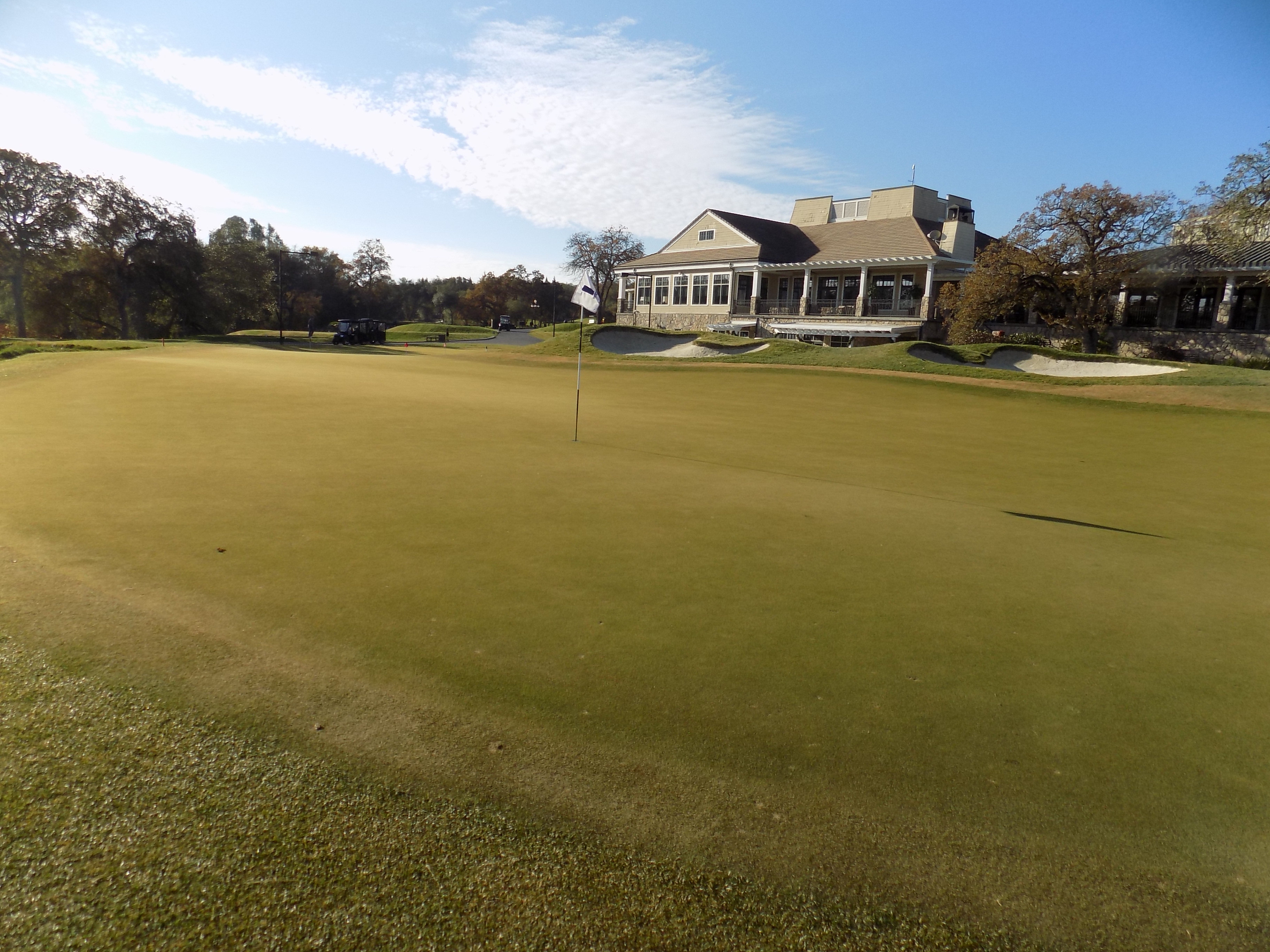
Above is a fair representation of the greens Members will encounter on Saturday when the course re-opens. Small 1/4" holes wont deflect ball roll, but speed will be down for at least a week longer

Fairway Aeration

Flagging irrigation heads and valve boxes is the first step in any aeration process as aeration equipment will destroy irrigation heads and must be avoided. Even with all of the proactive work of flagging heads it is enivitable that some of them will get clipped with the aerator and require replacement. 


Granite Bay is blessed to have two Toro Procore 1298 Turf Aerators for aeration. Having two big aerators allow us to get allot done rapidly in the AM so when daybreak arrives the extracted turf cores start to dry out and we can start to process them. Dry conditions are crucial for the remaining processes of verticle mowing, sand topdressing and brushing. Above depicts the two Procore 1298's extracting cores on #9.


We took advantage of the flagged irrigation heads this aeration cycle and trimmed the overgrown turf from them. This will allow us to identify the low heads so we can start the process of raising and leveling them.

We added Vertical Mowing to this years aeration process with the goal of getting the Santa Anna Hybrid Bermuda  fairways into a more upright growth habit and at the same time removing thatch or excessive organic matter. The entire process of aeration and vertical mowing must be done when the Santa Anna is actively growing which is the primary reason we close the golf course the week after the 4th of July. 


Here is a good look at the verticle blades of the vertical mowing units for our fairway mower's. The blades are set to go down almost 1/2" removing thatch and cutting the lateral stems or stolons of the hybrid bermuda plant. This encourages new sprouts from severed stems and promotes an upright growth habit.


Above is a good look at the fairway surface after core aeration and verticle mowing


The next step is to sweep up all of the thatch and debris removed from the aeration and verticle mowing process.

We left piles of this thatch and debris in native areas near the holes we were aerating. We do this because time is of the essence during this process and we need to complete the entire job in the allocated closure time of one week. It would take too long to drive the sweepers across the course to dump on the corner of Barton Road. We will come back and remove these piles next week.

After the sweeping  process we use a mower to cut the bermuda plants that were stood up from the sweeping.  Mowing at this point creates  more oppurtunities for sprouting of new plants and upright growth.

After aeration & Verticle Mowing cleanup and mowing we start to add topdressing sand .

After adding the sand we like to let it dry a little and then brush it into the turf canopy.

Here we are brushing in the fairway topdressing sand.

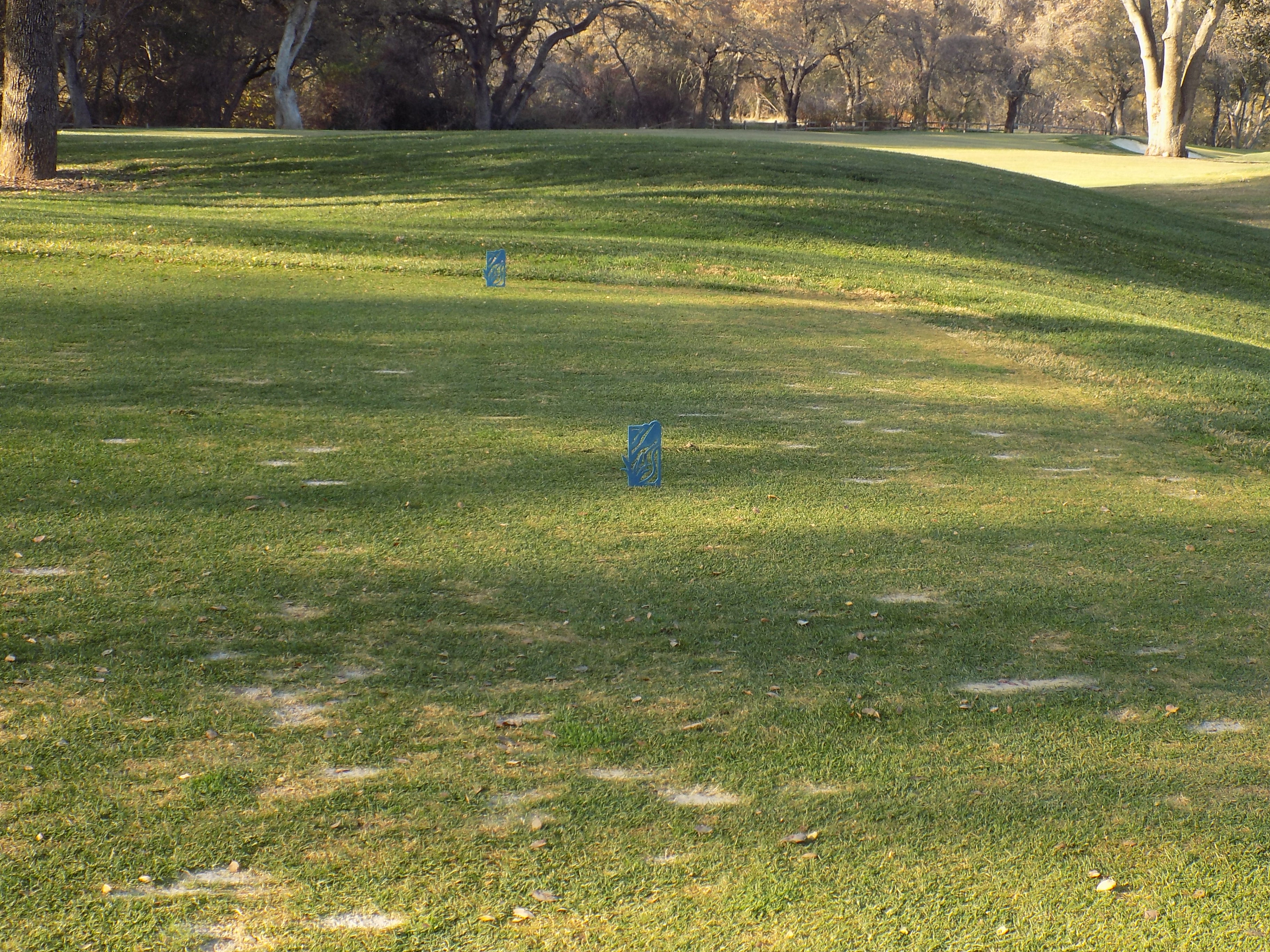
Above is a fair representation of the fairways Members will encounter on Saturday when the course re-opens. This is #1 which was done early in the process so will be a little farther along then subsequent holes. You'll see some brown, you'll see some sand which will mostly disappear by next week.


We appreciate your continued support and understanding as we care for the Club's greatest asset. We in GCM take great pride in maintaining the course, and we're excited to welcome you back to enjoy it.


Friday, July 12, 2024

2024 Fairway Aeration & Topdressing Process

After being closed for a week, we are putting the finishing touches on our 2024 fairway aeration & sand topdressing.  We decided  to close for the traditionally slow week following the 4th of July rather then stretching out the necessary process for 3 to 4 weeks with alternating F9 & B9 closures. This will make the process more productive and produce consistent playing surface's with recovery being more or less equal.

Not only will the fairways recover at the same time, GCM  can get back to our normal irrigation regimen after they recover as open aeration holes will cause the fairways  to dry out hindering recovery.  Additionally we can get back to using sharp mowers as the  topdressing sand disperses  and the surfaces recover, and we can logically re-sharpen reels. 


What To Expect Saturday 7/13/24

You should expect a very playable, freshly aerified fairway surfaces with open holes and the remnants of topdressing sand. As mentioned above, open holes can dry the surface out rapidly so the fairways could be wetter initially then what you might expect, which will effect ball roll temporarily. If you dont want to scratch your clubs you might want to consider using a older set until sand disperses. 

A picture is worth a thousand words. For those who are interested enjoy the pic's chronicling the steps of aeration week at GBGC.


First step is to mow the fairways. We set the fairway mowers to as low as we can currently go    (about .400") to "scalp"  them down as low as we can get them. Even though we are in the middle of a heatwave in July, these hybrid bermuda fairways can take it as they are actively growing and will recover quickly.


Next step is to flag all of the irrigation heads, valve boxes, yardage markers so we do not hit them with the aerator's.


Next we start to aerify across the fairway in short patterns on both sides of the flagged irrigation heads, valve boxes & yardage markers.


These patterns on both sides of the irrigation head allows for the next aerifyer to move up and down the fairway at ease and safety from hitting the head. Even though the heads, valve boxes and markers are flagged , there is allot going on with a heavy piece of equipment and easy to make a raising or lowering mistake and take out a sprinkler head, valve box or bronze marker.


Granite Bay is blessed with 2 large fairway aerators. This one is aerating up the fairway after the above depicted work around the heads, boxes and markers. 


The third aeration process is the short grass around the greens utilizing a smaller walk behind aerator. This aerator is equipped with smaller coring tines then we used on the fairways but he hole pattern is tighter. Cleanup of these cores is being done by GCM staff with backpack blowers and rakes and shovels as we cant navigate the large aerators and sweepers in these tighter areas adjacent to the putting surfaces.


After the actual aeration process we remove the flags from irrigation heads, valve boxes and yardage markers and drag using a keystone metal drag mat. This process preserves previously applied  topdressing sand and substantially lessons the burden of the following step, sweeping.


Next we start sweeping the core debris with the large sweepers. When we are done with sweeping it is time to start the most time consuming part of the process, sand topdressing.


Prior to aeration week we take delivery of topdressing sand in three locations around the course. Above depicts the pile on the Barton Road lot which we use for #1, #2, #4 and any leftovers #9. We also stock pile sand in the corner of the parking lot which we use for #5 - #9 & #17 - #18. The third location on the small out of play lot pin high to the left of #12 green. This pile services #10 - 13 & #15 & #16.


We use a 4 yard topdressor to topdress 30 acres of fairway and short mowed hybrid bermuda turf. The above rate represents  approximately 31 tons per acre which amounts just over 900 tons. Above Enrique is painting #4 with fairway topdressing sand. 


Here Enrique is spreading that 30 tons per acre on #5. Again the spreader holds 4 yards so he makes about 170 trips to a sand pile and back during aeration week. That is an average of 34 trips per day and just about 4 trips per hour. Sometimes more trips per hour, many times less obviously depending on the distance needed to travel.


This picture depicts #15 recently topdressed on the left, In the middle #16 in process of being topdressed, the green circled section representing one trip to the #12 topdressing pile. On the right is #10 which was topdressed, brushed and irrigated the previous day. 


Its takes our whole staff to pull off aeration and topdressing of the fairways in a week and I appreciate all of them, but none are more important  then the
GBGC GCM legend Enrique Reyes Huerta, sand topdressor extraordinaire. 


Next step is to drag the sand topdressing into the aeration holes and turf canopy. I have personally done most of this process myself since our 2021 conversion and can say every time we do this you can feel these fairways getting better. It wasn't hard to get the sand dry this week as we were in the midst of a July heat wave and our new large fairway brush with stiff bristles worked the sand in nicely.


A few days after some deep watering we mow them for the first time and follow them with a blower to clean them up. Doug on the fairway blower has been pretty actively blowing during the core clean-up process as well as the fairway topdressing process moving sand accumulations around with the turbine blower. 


Irrigation during the week was  tricky as we needed to keep the surfaces on the dry side prior to aeration and  topdressing but couldn't completely neglect irrigation after they were aerified because of open holes that were exposed to hot drying weather. Good news that any discoloration from dry down will soon recover after we start irrigating and the deep watering they receive  after brushing in sand topdressing 


This represents the product 3 days out of topdressing. Holes on the B9 will be a few days out from the F9 but all should be recovered by next weeks end. We are planning cart path on hole #'s 15 & 16 as they were just topdressed the morning of Friday 7/12/24 and will receive a deep watering when we are done brushing and could be wet when we re-open the course Saturday 7/14/24


Friday, July 7, 2023

Fairway Aeration & Seed Head

Our fairway turf conversion in 2021 from cool season turf to warm season hybrid bermuda included the choice of  Santa Anna Hybrid Bermuda as our warm season turf choice. If you recall, we chose Santa Anna because it held onto its color longer and came out of winter dormancy sooner then any of the other hybrids we were sampling. One of the knocks on Santa Anna though is its propensity to to produce seed head and the seed heads associated stalks. 

We can mitigate this seed head production with growth regulators, and were successful through June in doing so and honestly thought the applications we made were going to suffice all season. However we learned quickly it is a futile task  attempting to out smart nature, and almost overnight our fairways exploded with seed head. We all need to be reminded on occasion that the field that we play the game that we love on, is a living breathing complex organism that will do what it does despite our efforts at times and you just cant fool mother nature. 

The seed head  of hybrid bermuda is sterile. It wont even germinate or make another plant, its just unsightly, especially from afar. When your standing over the top of it the tan coloration is not that evident but from afar the fairways as a whole take on a tannish hue.  We have treated it with another application of growth regulator which will help mitigate the appearance in a short period of time we hope. Scheduled core aeration and sand topdressing will help as well.


From afar the hue of the accumulated seed head seems tan or yellow in color and looks like there is something wrong or the fairways are stressed out.


But when you are standing over your ball you see healthy turf and a pretty good lie in most instances.


Laying down you can really see up close what is going on. Some of the seed stalks, which are tan or yellow in color, are sticking up but many are lying down, and the accumulation of these are what gives us the overall tan appearance from afar. Pesky seed heads!


2023 Summer Fairway Aeration

Our scheduled fairway aeration is coming up in mid July. The golf course will never be completely closed as we will only work on nine holes at a time so there will always be nine holes available to our Members. Our plan this summer is to core aerate, drag the cores, mow then sand topdress, then drag the sand topdressing in. I'll provide plenty of pictures of the process when we get started. Below is a schedule of the work and associated closures.


Tuesday 7/18/23 - Thursday 7/20/23 B9 Closed for Aeration. F9 Open
Monday  7/24/23 - Wednesday 7/26/23 F9 Closed for Aeration. B9 Open


This is us aerifying #6 fairway in April of this year. We utilized solid tines that application. We will be pulling cores this coming application.


Swan Update


Nature is exacting and it was stated in a previously  linked bird fact article on swans "around 50% of cygnets fail to survive longer then 2 to 3 months." So far that statement is true for our new family of cygnets, as we started with six and now have three. 


Recent photo of the abbreviated family near ladies tee on #1.


Friday, December 2, 2022

Winter Conditions at The New Granite Bay

Last year in 2021 we re- opened the golf course  in October after a major renovation. The eight month project included re-surfacing the  greens, tees & fairways, converting the fairway turf from a cool season assortment  grass to a singular stand of warm season Santa Anna Hybrid Bermuda, as well as  completely re-designing & re-building the bunkers.  The  golf course was still being grown in the winter following this re-opening in October 2021, and therefore was not a great example of a typical winter. Additionally we were cart path only through the entire winter into the spring of 2022, and the rain year was historically dry, highlighting this unusual first winter.

Fast forward to today to our first typical winter, and what we can expect as we move through it into the spring of 2023 and beyond. The winter season's declining daylight hours & solar radiation, along with lower overall temperature's, frosty mornings and potential rainfall all cause turf grass growth to slow down in the transition zone that our area resides. All of the pictures below highlight this, and also tell the story of what we might expect moving forward in the winter with the new Granite Bay.


Good graphic on where we live and the challenges of turf grass management in a true transition zone where there are distinct seasonal differences that can support both cool and warm season turf. 


Our new greens are now 100% creeping bentgrass just like what they started with in 1994. Creeping bentgrass in my experience acts like both a warm season grass and a cool season grass in our climate. It is less susceptible to summer heat then our previous poa / bent greens but slows way down in the winter when days are short and temps are low. The reason why they are generating the speed they are right now  is because the bentgrass is hardly growing and we are hardly irrigating them. When temperature's warm up spring through fall, creeping bentgrass starts to actively grow and  performance depends on the culturing practices of mowing, rolling, sand topdressing etc. In the winter we just mow them and they are off to the races. 


What To Expect In The Winter With Our New Greens: Expect the speed to continue as they wont start actively growing again until early spring. The down side to minimal growth is ball marks will not repair themselves as rapidly. Ball marks have been an issue with these new greens since we opened in October of 2021. Its every players responsibility to properly repair their ball mark after hitting the green.


Our new fairways are 100% warm season Santa Anna Hybrid Bermuda. The best is yet to come on these fairway's as we continue to culture and sand topdress them. This grass thrives in the hot summer and fall months, slows down in the late fall, and stops growing and goes dormant in the winter. It wakes up in the spring and starts the cycle over again. Even though it stops growing in the winter, hybrid bermuda can be a very good playing surface, particularly when it is not getting allot of rain. This dormancy that Hybrid bermuda will experience like all bermuda grass is one of the perceived disadvantages, as it not only stops growing but can turn brown. We have treatments that can mitigate the color scenario but can do nothing about it's growth interruption.


What To Expect In The Winter With Our New Fairways: Both of the above pictures are examples of  our new warm season Santa Anna Hybrid Bermuda Fairways right next to our cool season Tall Fescue Rough in early December 2022. Color is still pretty good in part because of our choice of the  Santa Anna variety, and in part because of bi-weekly pigment and iron treatments. We will continue these type of treatments every other Monday, but as we progress into the depth of winter in January expect a browner shade of green. The sharp definition of cool season Tall Fescue on the fairway / rough edge will provide a crisp contrast. Additionally,  the puffiness of the fairways are a result of our raising the height of cut on the fairways prior to their slowing growth habit. This was recommended to us as a best management practice for bermuda fairways in the winter because if they are too short and go dormant, the turf can get worn down to dirt from cart and everyday activity. 


What To Expect In The Winter With Our New Fairways (part 2): Above picture shows an unfortunate reality of dormant bermuda, lack of divot recovery. These divots will recover rapidly once the fairways wake-up in the spring but until then, they will be  filled with sand.


What To Expect In The Winter With Our New Fairways (part 3): These pictures were taken in early December 2022 and closely depict both the puffiness from raised height of cut and gray-green color the Santa Anna takes on in the winter. You can also see remnants of the green pigment treatment we applied to help reflect the green chlorophyll still remaining in the plant. Some of the bermuda course's in the south and desert that do not overseed but use turf paint and apply it to their fairways providing a green color on the straw brown bermuda. We have opted, at least for now, to use the above mentioned pigment and iron,  ceding the bright green look for a more natural grey - green  winter color. Expect the fairways to continue to go off color but hopefully remain a shade of grey - green and  still framed nicely by the distinct green of the Tall Fescue Rough.


Our tees were all re-surfaced with Santa Anna Hybrid Bermuda like the fairways, but many levels are just too small to get through the winter without  being overseeded. Therefore we did overseed our tees this fall but purposely at a medium / light rate so the overseed would not be overly competitive with the Santa Anna Hybrid Bermuda when it awoke in the spring. We will have to see how this strategy plays out this winter, and adjust accordingly next season if necessary. Additionally as I've mentioned in previous updates, bermuda in general does not like shady conditions and the course has an abundance of shade from trees particularly in the winter months when the path of the sun is at a lower angle.


What To Expect In The Winter With Our New Tees: Many of our tees have always struggled in the winter months. Turf growth slowing down, small tee levels and shade associated with many levels are all a bad combination for success and unfortunately our 2021 renovation didn't universally address this issue. More tree pruning to mitigate shade issues as well as construction of new additional tee levels are all on the table for future improvements.


What To Expect In The Winter With Our New Golf Course:
A little frost, hopefully allot of rain for the big picture, and some clear weather in between so you can enjoy the Oasis & Home Away from Home that is Granite Bay Golf Club as described in some recent surveys. 


We in GCM want to thank our Members for all of your support and hope you all are having a great start to this Holiday Season! The Best Is Yet To Come!