Showing posts with label Wildlife. Show all posts

Tuesday, January 21, 2025

Dry Start to 2025

The wet weather that Northern California experienced in late December of 2024 has flipped to dry in 2025. Mornings have been a bit frigid with a frost delay here and there, but with the absence of rain and occasional gusts of wind, the golf course has dried out and is playing winter fast and firm in most areas. The long tree shadows of winter keep some areas shady and therefore wet from December's rain, but we are getting one those Januarys where cold mornings and sunny temperate afternoons create good conditions for winter golf. These conditions are good for getting things done on the golf course as well as turf is not growing and we are not having to irrigate so can easily allocate resources to projects from our GBGC Master Improvement Plan. 

On that note, the week of January 20th GCM plans to start a multi-week project on the right hand side of #2 cart path near the green. We need to replace the curbing in this area that was damaged during the 2021 renovation. Additionally we want to do some irrigation retrofitting and some sod work. When doing this work, we plan on occasionally re-routing Member cart traffic in front of the green to the left had side, then over to a forward position on #3 tee. This occasional detour will start Wednesday 1/22/25 after the MLK Holiday along with back nine starts with the hope of  creating less inconvenience to the Member during our activities in the area. We estimate this work will take us through the first part of February. 


Above shows the damaged curb and the area we plan to start working on the week of January 20th. 


The detour will be delineated by simple cart directional signs. Cart path will be coned off at this juncture and the detour will be pretty hard to miss.


The forward location of #3 tee wont be much different for the pebble tees (green) but clubs will be paired with the pebbles and Granite's and Tournaments will be paired as well at about 25 to 30 yards shorter then their normal placements. 


Granite and Tournament tee markers will again  occasionally be located around the 136 yard marker on #3 when we detour cart traffic around the left hand side of #2 green during some repair and retrofitting work on the right hand side of #2.

Recent Birds of Granite Bay Golf Club

Granite Bays resident bird expert, Michele McCormick was out on the course when we were closed on Tuesday 1/21/25 and shared that she has been sighting some rare birds for our property that are starting to make GBGC their home we hope. Below are some stunning examples of Michele's work right here at GBGC.


Bufflehead


Great Blue Heron


Kingfisher


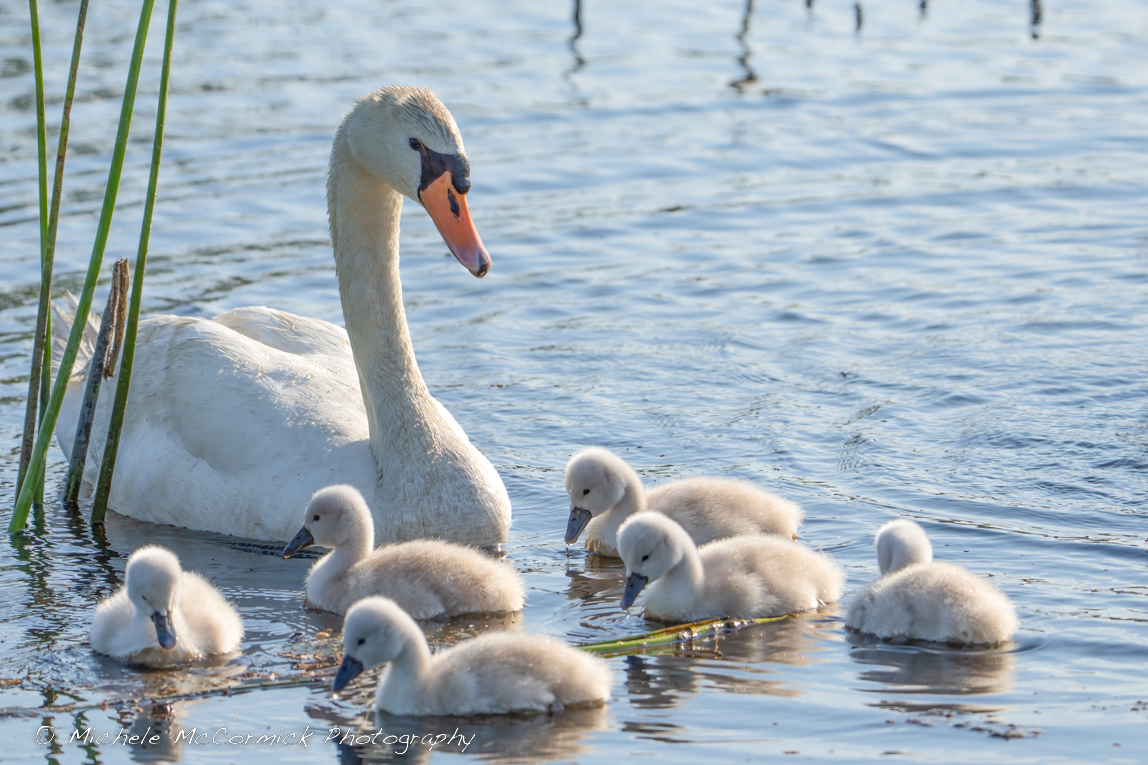
GBGC's Mute Swan returning for a third season.


Ring Necked Duck


Brand New to GBGC American Wigeon


Thursday, August 17, 2023

The Dog Days of Summer 2023


Here we are again, The Dog Days of Summer at Granite Bay. The "Dog Days", as the ancient Romans called this period of time, was not about the weather being unfit for a dog, but an astrological event where the Sirius "Dog Star" and associated constellation rises with the sun for 40 day's in early July through mid August. The ancients believed the extra heat experienced during this stretch was the combination  of  heat produced by The Dog Star and The Sun's close proximity. But science tells us the dog days are the result of the earths tilt in the Northern Hemisphere related to the sun, where the angle of the suns rays hit our part of the world more directly,  and for a longer period of time. 

The Dog Days and summer in general have always taken its toll on GBGC, but if one is to be fair and search ones memory of past summers here, you would have to come to the conclusion that we are better in the summer now since we converted fairways to Santa Anna Hybrid Bermuda. However since our cool season rough encompasses more of the golf course then our new warm season fairways, we are still susceptible to summer heat and 2023 is no exception. 


Collar Sod Replacement

One of the areas on the course that did take a hit this summer was some of our collar sod. Whether it struggled, thinned and in some cases died from any combination of heat, bad soil, lack of moisture, too much moisture, vehicle and foot traffic, bad luck, it ended up dead. And no amount of seeding will bring it back quick enough, so we are in process of re-sodding portions of the collars.


GCM staff re-sodding walk-up collar on #3.


There are some challenges with re-sodding parts of  our collars. During 2021 construction, a tall fescue blend of sod was chosen as the collar sod to hold back the encroaching Santa Anna into the newly seeded greens which was a real issue at the time. Tall Fescue was chosen for its heat tolerance, and it is, despite our current losses,  more heat tolerant then other choices such as ryegrass. However tall fescue sod  is not commercially produced at the lower heights of cut that we maintain our collars at, so we have to install the taller sod 1/2" deep and sand topdress the difference so when we eventually mow the sod down to match our current collar's level, we dont mow the Turfgrass Crown of the individual grass plants that make up the new sod and kill them. Therefore we have to slowly  bring the height of cut down as the new sod roots into the soil  as well as continue to topdress the aforementioned 1/2" gap. This will take some time so the new sodded areas will be painted as GUR so golfers can get relief from the taller replaced collar sod.


Completed collar replacement will be marked GUR for awhile as it roots down and establishes. 


Recent Drainage Installation

Our recent fairway aeration and topdressing in late July exposed some fairway drainage work, that although we knew existed, we believed  necessary to repair sooner rather then later. Therefore shortly after aeration we installed 100' of surface drainage in #15 in one location  and almost 500' on three separate locations on #9. We still have more topdressing to do to smooth these areas out and will continue to do so until the areas blend with existing fairway turf. 


GCM staff installing surface drainage on #9 FW.


Shortly after installation. The work is serving its purpose moving water off of a low areas in the fairway. Subsequent topdressing's and sod establishment will rapidly make tis go away at this time of the year as hybrid bermuda loves the heat.


Minks Getting Established

Mink sightings on the course are becoming more and more numerous. Michele McCormick, frequents the course on closed Mondays capturing nature through her spectacular photography. On a recent Monday she got the below shot of a Mink swimming in the pond between #1 and #9. Recent sightings by GCM staff included a small family of four minks sticking their heads up through the rocks in front of #3 green as well as numerous sightings of them running along those rocks, and another chasing a goose off of #10 fairway early in the morning. They could have had something to do with our missing baby swans and perhaps are another reason why geese are not overnighting on our ponds. Additionally, and this is just an anecdotal observation on my part, but I dont notice as many ground squirrels around. As is all things related to nature, be carful what you wish for, but if the Minks establishment help keep the geese and ground squirrels in check, we might have a good thing going.


Great capture of a Mink swimming in #1 & #9 ponds.


Another great shot of a Hawk and a Lizard


Wednesday, August 9, 2023

Canada Geese

We all know that GBGC is a magnet for the pesky Canada Geese, and despite some early season successes in humanely chasing them off the course, we have had a resurgence in what we believe are regionally migratory geese, who are moving around the area.  We speculate this because they do not overnight on our ponds thanks to the Away With Geese lighting we have placed on the golf course ponds that disrupt the sleeping pattern of the geese, forcing them to slumber somewhere else. My guess is Folsom Reservoir, which as the Goose Fly's is just over a mile.


Folsom Reservoir is a almost nothing flight for a Canada Goose.


The Away With Geese Lights do exactly what they are designed to do, keep geese populations from getting really comfortable by overnighting on our ponds. These simple solar powered flashing lights do keep them away at night.


How do we know these geese are not overnighting? GCM starts each and every day in the dark, and the lights are flashing and the geese are not here. What we are observing are these  regional migratory flocks arriving later in the day to feed as food sources are far and few few between this time of the year. They seem to like eating the cool season rough grass lining the fairways in the #9, #8 & #5 areas predominantly, but they are foraging and leaving behind their mess all over the course.

What are we doing about the problem? We have been stepping up our dog chasing  efforts which historically has kept the Geese populations in check.at this property. Granite Bay has been using  Dog & Whistle Goose Control to chase and harass Geese since 2009. Dog & Whistle adopt and train rescue Border Collies, a natural herding breed with a "supernatural amount of energy and stamina". They are trained to get into the water which is a must for hazing Geese as the birds first instinct when being chased on land is to go into the water. When the pressure continues from land into water over and over again they will go else where to find a food source. 

Timing on the flocks arrival varies day to day  so GCM is using our large fairways blowers to harass and blow off Goose droppings at the same time in the early afternoon using two blowers, one on each side of the pond on #9. Since the blowers cant go into the water, we are trying some remote control boats to chase them once they have landed there. After GCM goes home, Dog & whistle comes out and applies more pressure with the Border Collies. Hopefully this multi-faceted approach will keep this regional group in check until rice harvest, only a month away and another desirable food source.


Friday, July 7, 2023

Fairway Aeration & Seed Head

Our fairway turf conversion in 2021 from cool season turf to warm season hybrid bermuda included the choice of  Santa Anna Hybrid Bermuda as our warm season turf choice. If you recall, we chose Santa Anna because it held onto its color longer and came out of winter dormancy sooner then any of the other hybrids we were sampling. One of the knocks on Santa Anna though is its propensity to to produce seed head and the seed heads associated stalks. 

We can mitigate this seed head production with growth regulators, and were successful through June in doing so and honestly thought the applications we made were going to suffice all season. However we learned quickly it is a futile task  attempting to out smart nature, and almost overnight our fairways exploded with seed head. We all need to be reminded on occasion that the field that we play the game that we love on, is a living breathing complex organism that will do what it does despite our efforts at times and you just cant fool mother nature. 

The seed head  of hybrid bermuda is sterile. It wont even germinate or make another plant, its just unsightly, especially from afar. When your standing over the top of it the tan coloration is not that evident but from afar the fairways as a whole take on a tannish hue.  We have treated it with another application of growth regulator which will help mitigate the appearance in a short period of time we hope. Scheduled core aeration and sand topdressing will help as well.


From afar the hue of the accumulated seed head seems tan or yellow in color and looks like there is something wrong or the fairways are stressed out.


But when you are standing over your ball you see healthy turf and a pretty good lie in most instances.


Laying down you can really see up close what is going on. Some of the seed stalks, which are tan or yellow in color, are sticking up but many are lying down, and the accumulation of these are what gives us the overall tan appearance from afar. Pesky seed heads!


2023 Summer Fairway Aeration

Our scheduled fairway aeration is coming up in mid July. The golf course will never be completely closed as we will only work on nine holes at a time so there will always be nine holes available to our Members. Our plan this summer is to core aerate, drag the cores, mow then sand topdress, then drag the sand topdressing in. I'll provide plenty of pictures of the process when we get started. Below is a schedule of the work and associated closures.


Tuesday 7/18/23 - Thursday 7/20/23 B9 Closed for Aeration. F9 Open
Monday  7/24/23 - Wednesday 7/26/23 F9 Closed for Aeration. B9 Open


This is us aerifying #6 fairway in April of this year. We utilized solid tines that application. We will be pulling cores this coming application.


Swan Update


Nature is exacting and it was stated in a previously  linked bird fact article on swans "around 50% of cygnets fail to survive longer then 2 to 3 months." So far that statement is true for our new family of cygnets, as we started with six and now have three. 


Recent photo of the abbreviated family near ladies tee on #1.


Sunday, June 4, 2023

Swan & Sod News

We have many great artists and resources who are Members here at Granite Bay, but we'd be challenged to find an equal to Michele McCormick in photography and Birding. Michele frequently visits the course on closed Mondays to get spectacular photos of Birds, Wildlife and Interesting Plants so I contacted her to inform her that our Mute Swans had hatched their cygnets. She jumped at the opportunity to get some shots of the new arrivals last Monday. She spent the day out here and documented  31 Bird Species this visit.

Additionally she  let me know that she catalogs her findings with eBird, a site that catalogs birding activities, photos and species migration from collaborators all over the world. And through Michele's passion and skill, Granite Bay Golf Club is contributing to science and conservation on a global scale. We are blessed to have her as a part of our community. Below are what Michele deemed some of her best shots of the day. 


Coopers Hawk

Besides the great photos of the swans, we received a bonus through Michele's efforts as she captured a first at Granite Bay, a Coopers Hawk. Michele told me it  "Was fun to get the Swan pix but I was even more excited about the Coopers Hawk and chase! There were actually two Coopers. Here’s the juvenile."


"Here's something you don't see every day - A Cooper's Hawk determined to have an Acorn Woodpecker for lunch. It was like something out of Top Gun! Near #3 green. mm"


Links

Michele McCormick Photography

Cornell University's eBird


Sodding Behind #2 Green

One area of turf on the course that never really fared well nor came out of winter was behind #2 green. Shade of the large oak tree behind the green was the main culprit but there were some inherent bad soil issues in the area as well. Shade and suspect soil are a bad combination for growing anything much less hybrid bermuda turf.

We stripped out the worst section this past week, conditioned the soil and re-sodded the area with new Santa Anna Hybrid Bermuda. We plan to get some tree trimming done in the area to alleviate the shade issues as well, allowing more sun to get into the area particularly, in the winter. Time will tell if this will be the permanent solution for the area, but the turf will certainly have a better chance with the soil modifications and future tree trimming. Below are some pictures.


Adding compost and sand blend


Rototilling the blend into our native soil


Conditioned soil


Grading and preparing for sod


Re-sodded


Saturday, May 27, 2023

The Cygnets Have Arrived

Congratulations to all of us new step-grandparents. as our adopted pair of  Mute Swans have hatched their first flock of cygnets. The linked article, Baby Swans: All You Need To Know is a very informative article. If you're interested you should checkout and prepare for what comes next with our new arrivals. We will of course document what we can.

In other golf course news, we deep tined and sand top-dressed greens this past Monday 5/25/23. Pictures below are worth a thousand words. 


The first sighting of the hatched Cygnets was Friday 5/27/23 by Ken Roberts captured here. 


I immediately put the flying camera up to confirm our numbers and am happy to report we currently have six healthy Cygnets. 


Here they are a day (?) old on Saturday 5/26/23 frolicking and feeding with their parents. Photo captured by GCM employe partner Amanda Bergstrom.


This photo was taken Monday 5/22/23 before we became aware of the new arrivals. Geese were nearby on #9 fairway and possibly chased out of the pond by protective parent. 


Other GBGC Wildlife News


I suspect the pair above or at least the brown wren were the parents of the eggs in birdbox behind #11 tee that I highlighted last week. This was taken right above the location of the bird box. 


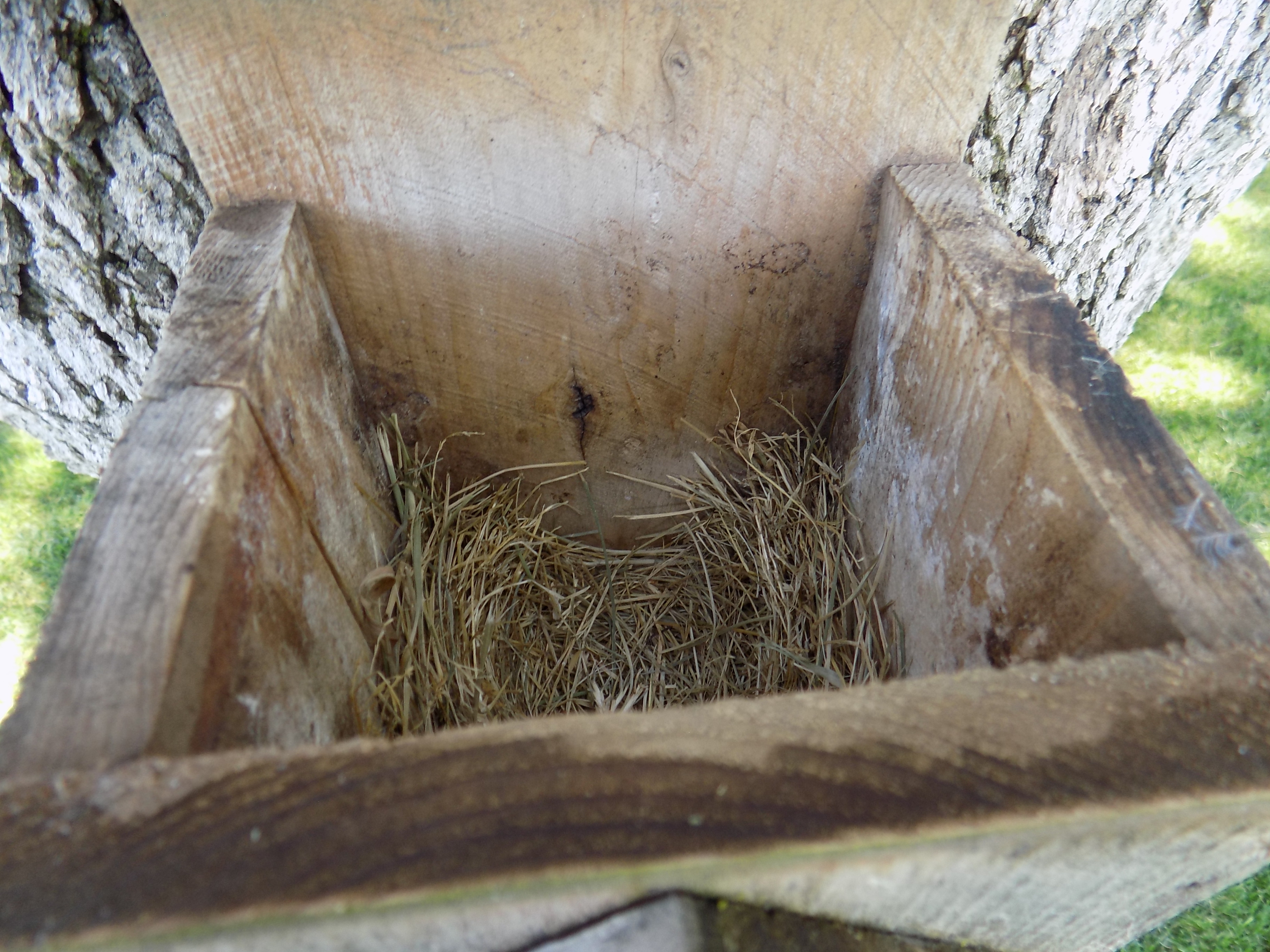
Unfortunately, when I checked the birdbox on Friday it was empty with no remnants of shells or anything in or below the nest. I thought parents might have moved the eggs because of my poking around and then  found out that wrens will move eggs for various reasons. Check out the below link.

Wrens Can Be Nasty Neighbors


Deep Tine Aeration


Enrique deep tineing or aerating the greens on Monday 5/25/23. 


These long tines penetrate 4 to 6 inches into the putting surface allowing much needed air to the rootzone facilitating deeper irrigation infiltration at the same time. Great practice that doesn't effect putting quality. This and similar practices need to be done frequently if we are going to avoid the more traditional, aggressive aeration practices in the future.


As you can see here this practice will not affect putting quality.


In addition to, and even more importantly, if we are going to avoid aggressive core aeration in the future with these new green's, we will need to frequently apply light dustings of sand to dilute the organic matter that a bent grass putting surface produce's naturally. The targeted amount of sand prescribed by the USGA Annual Sand Topdressing Amounts is anywhere between 25 and 30 cubic feet of sand per 1000 square feet per year. We are targeting 30. The above and below pictured application represents approximately 1 cubic foot per 1000 square feet. It is difficult to achieve 30 cubic feet per year just with light topdressings like this. It is easier to achieve if you aggressively aerate twice per year, but we are trying to avoid that if possible. We will need to get a little more aggressive with aeration such as a closer pattern of holes of either solid or coring to A - mechanically remove organic matter and B - allow for more topdressing sand incorporation helping reach the target of 30 cubic feet of sand per year.


After the 1 cubic foot application of topdressing we typically brush the sand into the putting surface followed by a little irrigation to push it down further, and a deep irrigation cycle the proceeding evening to push it even further. The next morning, we typically roll and blow the greens only to mitigate sand harvesting with the mowers, then try to roll first followed by mowing in the subsequent mornings which helps with the sand harvesting by
the mowers as well.


The Best Is Yet To Come. Thanks for your support!


Monday, May 22, 2023

New Sand, Sprinklers, Swans & Speed Signs

We are making our last push the next few weeks on what can be considered big golf course projects until after summer. This allows us to focus our recourses on maintaining and culturing the new warm season Santa Anna Hybrid Bermuda fairways and approaches as well as holding onto the new cool season Tall Fescue we have incorporated into our rough areas. We now have a 50/50 warm season - cool season golf course where half of it will thrive and need culturing in the summer while it is hot, and the other half will have to be babied with hand watering. There will always be some small little "low hanging fruit" projects that we will tackle, but starting anything big beyond routine golf course maintenance will be avoided until fall.

The current maintenance related non-routine projects I am referring to are the same ones mentioned last week, irrigation work on #13 and sand refreshing in the bunkers throughout the course. Completing the sand refreshing in the bunkers will take a while as it is turning out to be a more labor-intensive, time-consuming endeavor then anticipated with sand availability limitations as well. However, the big supplemental irrigation project on #13 we've been working on the past two weeks was completed this week. Below are some more pictures along with some Swan updates and a new "Speed Sign" that many of you will find fun. 


Above shows a set of sprinklers on the fairway edge recently installed in the upper right-hand rough of #13. These sprinklers water into the cool season rough only facilitating adequate irrigation for the cool season fescue without the need to overwater the warm season Hybrid Bermuda fairways. We installed three sets of these sprinklers covering the entire right hand rough edge on #13. The days of this area's substandard summer turf conditions should be a thing of the past.


Front bunker on #3 green has had its sand refreshed by adding the appropriate amount of sand, watering and compacting.


An important step in the refreshing process is checking sand depths. Above depicts Greg using a gauge for this purpose. Greg has been heading up this bunker sand refreshing process which is extremely labor intensive. Greg's one of the hardest working guys I know and GBGC is fortunate to have him.


Swan & Wildlife Update

Recent developments with our pair of swans deciding to take up residence at Granite Bay Golf Club have maybe reminded us of what we all have always felt about Granite Bay and how special this place is. Below are a few more examples of just that. 


Swan Nesting
 continues just adjacent to the #1 green in the bull rushes. I got a little closer trying to get a peek at the eggs but no luck yet. 


Came across this guy heading up #2 the other day and immediately relocated him to pond on #3.


Perhaps he reunited with his family later. Or she?


Dave Cook caught this picture of a bird box behind #11 tee being utilized by who Dave suspects are Wrens. We will check back in on this family later next week.


Posting Daily Green Speed

We started posting daily green speeds this week on a sign on the front of the starter station near the upper practice green. Green Speeds are a measurement in feet determined by the use of a tool called the Stimpmeter designed in 1935 by Edward Stimpson. The USGA Stimpmeter Instruction Booklet covers the history, use and the many management practices and conditions that effect green speed on a daily basis. I would encourage members who are interested in learning more about measurement of green speed to click on the above USGA link or look at the plethora of resources available on-line. They are endless.